
Surfaces That Direct Water Where It Belongs
Grading in Leland for drainage control, building site preparation, and properties requiring slope adjustments
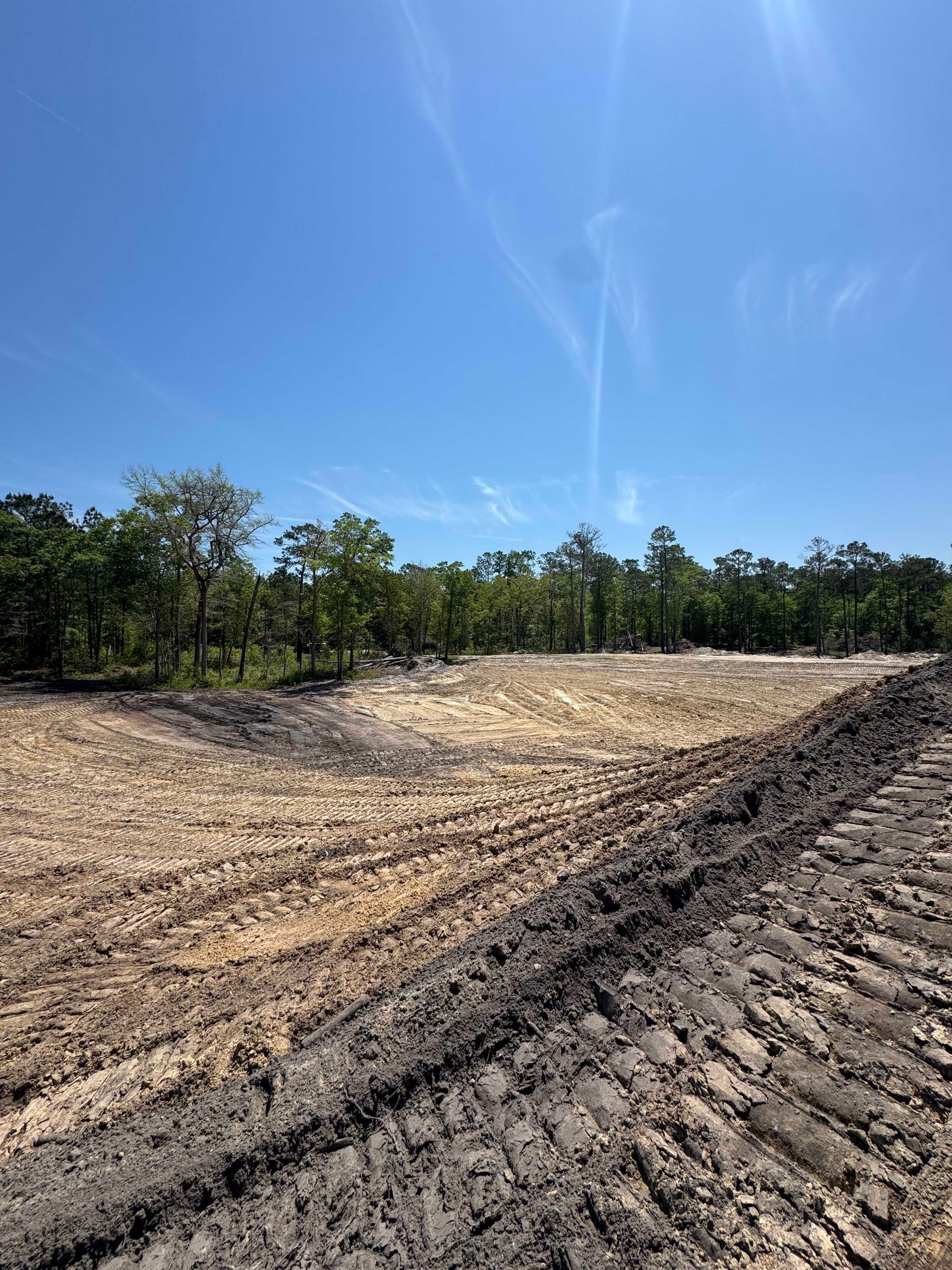
Rainfall collects against foundation walls, driveways slope toward garages instead of away, and low spots trap standing water for days after storms pass through coastal North Carolina. Phillips Excavation provides rough grading and finish grading for residential properties in Leland and Wilmington, reshaping ground elevations to move surface water off-site and create stable platforms for construction. Proper grading prevents water intrusion problems before they start and eliminates the pooling that damages lawns, driveways, and building materials over time.
Grading uses equipment to cut high spots and fill low areas until the surface follows a calculated slope—typically one to two percent grade away from structures to keep water moving without causing erosion. Finish grading smooths surfaces for sod, driveways, or concrete slabs, while rough grading establishes overall site elevations and drainage flow patterns.
Arrange an on-site consultation to assess current drainage patterns and determine grading requirements.
How Grading Addresses Drainage Problems
Grading begins with surveying existing elevations to identify where water currently flows and where it needs to go, then equipment moves soil to create slopes that direct runoff toward drainage swales, storm drains, or natural low points away from structures. In coastal areas, sandy soils drain quickly but erode easily, so grading plans often include stabilization steps like compaction or erosion control fabric in areas with steeper slopes.
After grading, rainwater flows away from building foundations instead of pooling against walls, driveways shed water toward edges rather than trapping it in the center, and formerly soggy low spots dry out within hours of storms ending. The yard becomes usable after rain events instead of remaining muddy for days, and you stop seeing water stains on foundation walls where moisture previously accumulated.
Grading projects sometimes include adding fill material to raise elevations in flood-prone areas or cutting down high spots that block natural drainage paths. Final surface preparation depends on what comes next—building sites get compacted and leveled for slab pours, while lawn areas receive topsoil and smoothing before sod or seed installation.
Common Questions About This Service
Grading questions typically focus on drainage effectiveness, material requirements, and timing relative to other site improvements.
What slope angle does grading create around buildings?
Grading typically establishes a one to two percent slope away from foundations, which moves water without causing erosion—steeper slopes drain faster but may require stabilization to prevent soil washout during heavy rain.
How does grading work with existing landscaping?
Established trees and plantings can be worked around by adjusting grades in open areas and using retaining walls or drainage swales where elevation changes occur near root zones, though some vegetation may need removal if it sits in required drainage paths.
When should grading happen during construction?
Rough grading happens after clearing and excavation but before building construction begins, while finish grading completes after structures are built and final elevations around foundations, driveways, and walkways are confirmed.
What material gets used for fill during grading?
Clean fill dirt or sand suitable for compaction gets brought in if existing soil is unsuitable or insufficient, with material selection based on drainage needs and what the surface will support—building pads require more stable fill than lawn areas.
How long does graded surface take to stabilize in Leland?
Compacted fill stabilizes within days if kept dry, but newly graded areas benefit from settling time before heavy loads or construction traffic cross them, especially during wet seasons when soil holds more moisture.
Phillips Excavation plans grading projects to manage coastal runoff effectively while supporting long-term property performance. Schedule a grading consultation today to review your property's drainage needs and receive a detailed estimate.