
Foundation Work That Supports What Comes Next
Excavation in Leland for properties requiring ground movement, site preparation, or land development
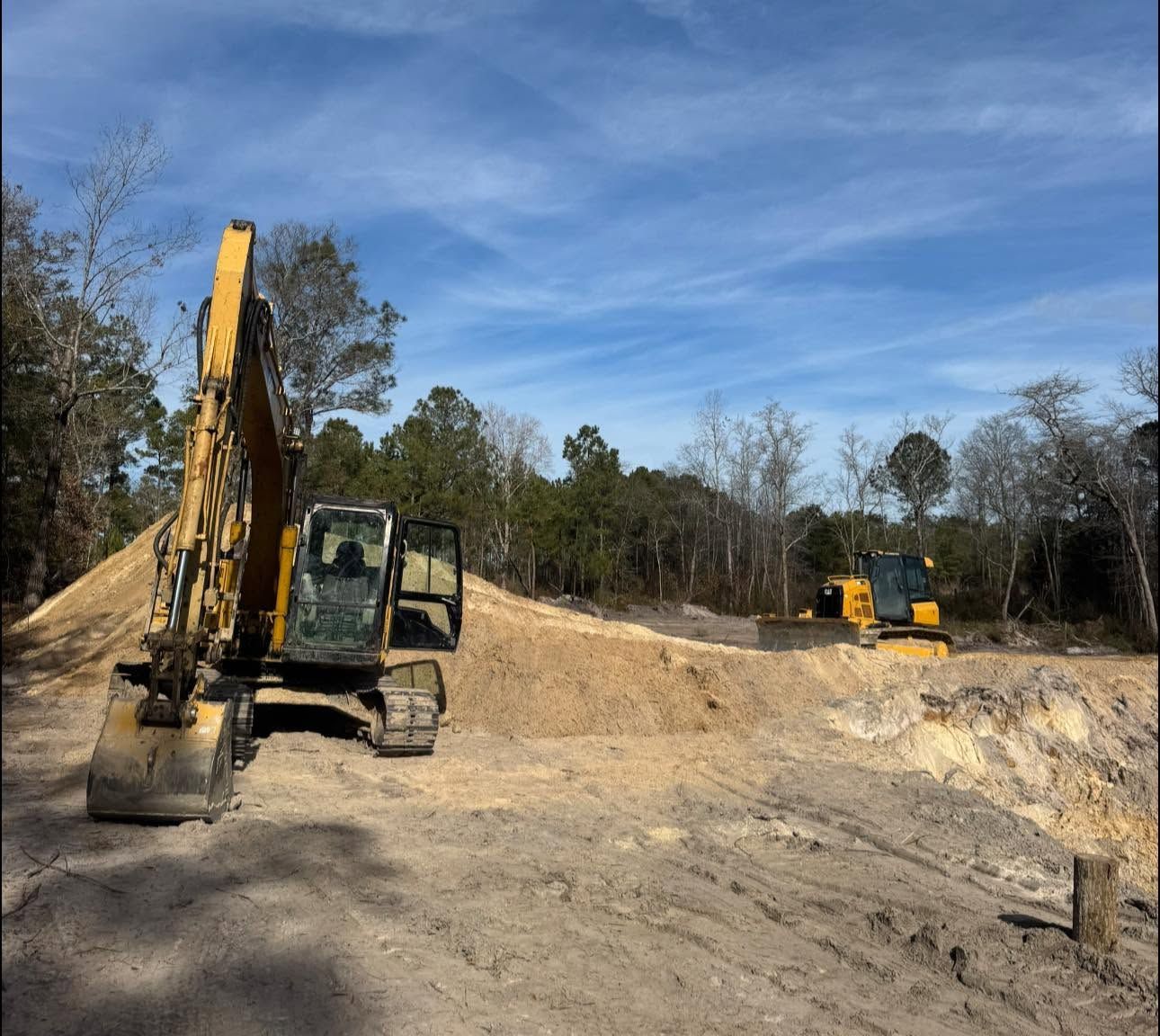
Phillips Excavation handles residential excavation projects across Leland, Wilmington, and New Hanover County, moving soil and preparing building sites for construction and drainage improvements. You need excavation when breaking ground for a new structure, installing drainage systems, or reshaping property elevation. Our equipment completes earth-moving work efficiently while accounting for the sandy, moisture-retaining soil conditions common along coastal North Carolina.
Excavation involves removing soil to create space for foundations, utility lines, septic systems, or grading adjustments that redirect water flow. The depth and scope depend on what the property requires—foundation footings demand precise measurements, while drainage trenches follow calculated slope angles to move water off-site. Coastal soils often include layers of sand and clay that behave differently under load, which affects how deep excavation must go and what base material gets added back.
Schedule a property evaluation to identify the excavation depth and access requirements for your project.
What Proper Excavation Requires
Each excavation project begins with locating underground utilities to prevent damage during digging, followed by marking boundaries and depth requirements based on engineering plans or site goals. Equipment selection depends on site access and soil type—compact machines navigate tight residential lots, while larger excavators handle open acreage more quickly. Material removed during excavation either gets stockpiled for backfill or hauled off-site depending on soil quality and project needs.
After excavation is complete, you see level surfaces ready for concrete pours, drainage pipes seated at the correct slope, or graded earth that channels rainfall away from structures. Water no longer pools in areas where soil has been reshaped, and building pads sit at elevations that prevent flooding during heavy coastal storms. The excavated area becomes a stable platform that supports whatever construction phase follows.
Excavation timelines vary based on soil conditions, site access, and weather—wet ground slows equipment movement and requires additional time for drying or stabilization. Projects also include compaction steps when backfilling around foundations or utility lines to prevent future settling. Some properties need dewatering if groundwater seeps into excavated areas before construction proceeds.
Questions Before Starting Your Project
Property owners preparing for construction or site improvements often ask about excavation depth, equipment access, and soil management before work begins.
What happens to the soil removed during excavation?
Depending on soil quality and project requirements, material either gets stockpiled on-site for backfill around foundations and utility trenches or hauled away if unsuitable for reuse.
How does coastal soil in Leland affect excavation work?
Sandy soils drain quickly but lack stability without proper compaction, while clay layers hold moisture and require more time to dry before equipment can work efficiently, which affects project timelines during wet seasons.
When should excavation be scheduled for new construction?
Excavation typically happens after permits are finalized and utility locations are marked, but before concrete work begins, so the building pad and foundation trenches are ready when contractors arrive.
What determines how deep excavation needs to go?
Foundation depth, frost line requirements, utility installation specifications, and drainage slope calculations all influence excavation depth, with each measurement verified before digging starts.
How is excavated area prepared for the next construction phase?
After digging, the base gets leveled and compacted to prevent settling, with inspections confirming depth and grade before concrete, utilities, or structural work proceeds.
Phillips Excavation coordinates excavation timing with builders and contractors to keep projects moving forward without delays. Request a free excavation estimate to review site conditions and project scope.